Do you feel like someone you love turns from hero to villain overnight? One moment, they adore you. Next, they hate you completely. This painful pattern has a name: BPD splitting. It is a real mental health condition that affects how a person sees the world. Everything feels either perfectly good or extremely bad.
There is no middle ground. Living with this is exhausting for everyone involved. Thankfully, understanding splitting in borderline personality disorder is the first step toward healing. The right support can truly change lives. WBS Mental Wellness is here to help you find that path forward.
BPD Splitting Meaning: More Than Just Mood Swings
Many people confuse splitting with simple mood swings. However, they are very different things. Splitting in borderline personality disorder is a defense mechanism. It develops deep in the mind during early trauma or emotional pain. A person with splitting cannot see the shades in life.
Everything feels either completely good or entirely bad. This black-and-white thinking is not a choice. Instead, it is an automatic response the brain learns for survival. Understanding BPD splitting meaning helps families and individuals stop blaming themselves. Recognizing it as a cognitive distortion is the first step toward real, lasting change.
What Causes BPD Splitting
Trauma is often at the root of splitting behavior. Many individuals develop this pattern during childhood. Neglect, abuse, or unstable relationships leave deep emotional scars. As a result, the brain learns to protect itself through splitting behavior in BPD.
Fear of abandonment plays a huge role here. When someone feels rejected, a splitting episode can trigger instantly. Additionally, emotional triggers like conflict or sudden change intensify the response.
Black and white thinking in BPD often links directly to identity confusion. A person struggles to hold a stable sense of self. Understanding these roots brings clarity and opens the door to proper healing.
BPD Splitting Symptoms: How to Recognize It
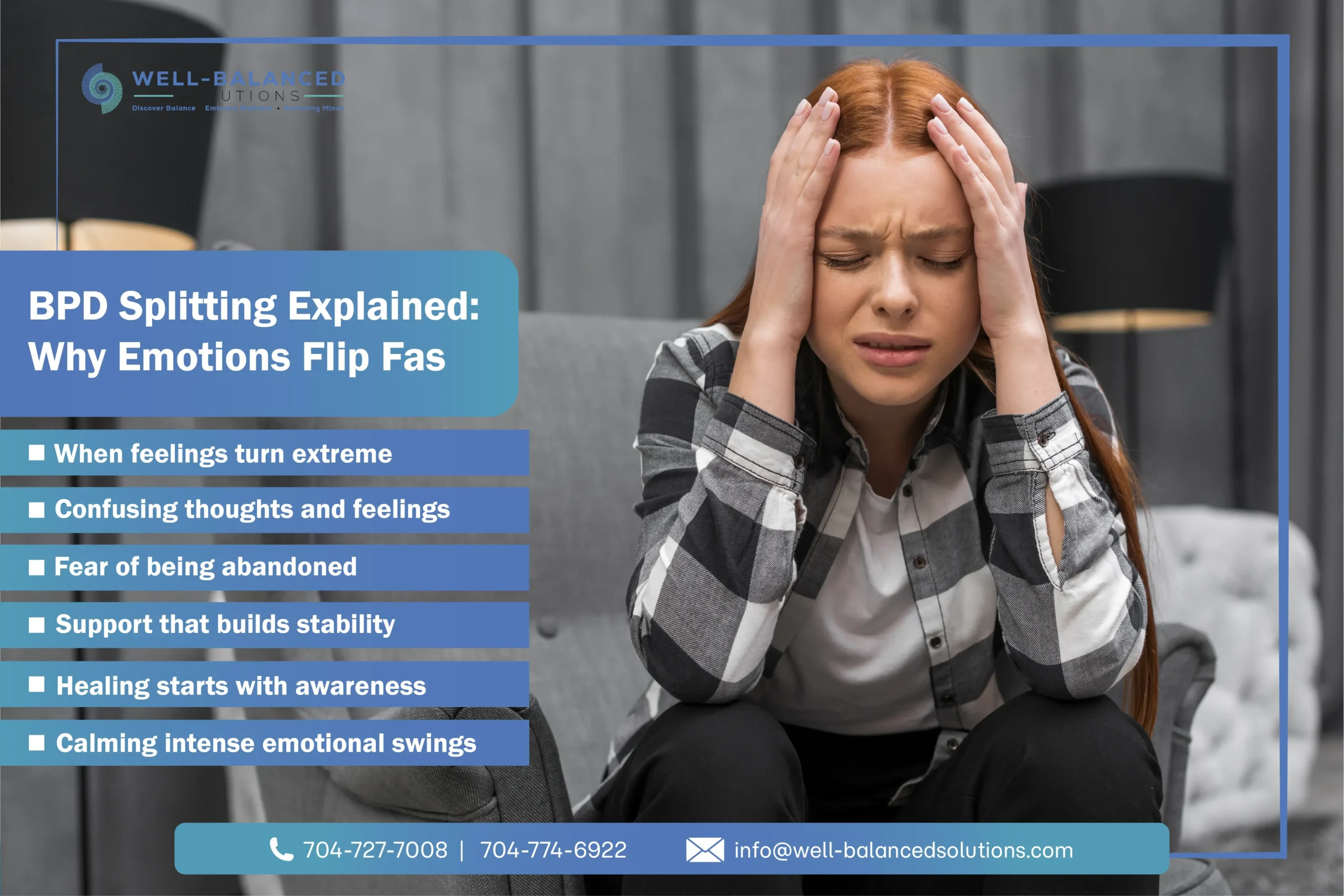
Recognizing BPD splitting symptoms early can make a significant difference. People with splitting often shift between extreme emotions very fast. One moment, they feel intense love. Next, they feel deep hatred.
These emotional shifts are not normal mood changes. They are powerful, overwhelming, and very difficult to control. Spotting the signs early helps you seek the right support sooner.
The Idealization and Devaluation Cycle
This cycle sits at the heart of splitting in BPD. A person initially places someone on a pedestal. Then one small mistake destroys that perfect image.
Common signs include:
- Sudden switches from love to anger in close relationships
- Intense emotional reactions over small or minor events
- Unstable relationships that shift between extreme closeness and distance
- Impulsive behavior during moments of emotional overwhelm
- Relationship instability caused by idealization and devaluation patterns
How Does BPD Splitting Work in Relationships
Relationships become very difficult when splitting is involved. A partner or family member feels confused and drained. Splitting in borderline personality disorder pushes people to see loved ones as either perfect or worthless. This black-and-white thinking leaves no room for balance.
As a result, small arguments turn into major emotional crises. Family bonds also suffer due to emotional imbalance over time. Furthermore, personality disorder symptoms weaken social connections gradually. Mood swings versus splitting may look similar, but splitting runs far deeper.
BPD Splitting Treatment: Evidence-Based Options That Help
Finding the right BPD splitting treatment changes everything for individuals and families. Effective therapies exist that directly target splitting patterns in the brain. Professionals use structured, evidence-based approaches to reduce emotional imbalance over time.
Early treatment leads to stronger relationships and a more stable daily life. The earlier someone seeks help, the better their recovery outcomes become.
Therapy Approaches Proven to Reduce Splitting Episodes
Splitting in BPD responds well to structured clinical therapy. Skilled therapists help individuals manage emotional dysregulation step by step. The right mental health condition treatment plan makes real, noticeable progress possible.
Most effective approaches include:
- DBT (Dialectical Behavior Therapy): Builds emotional regulation and distress tolerance skills directly
- CBT (Cognitive Behavioral Therapy): Challenges harmful thought patterns that fuel BPD splitting episodes
- Trauma-Focused Therapy: Addresses deep-rooted wounds that trigger splitting behavior at its core
- Schema Therapy: Rewires long-standing negative beliefs about self and relationships over time
- Group Therapy: Builds social skills and reduces emotional instability through shared, guided experiences
How to Stop BPD Splitting: Coping Strategies That Work
Stopping BPD splitting completely takes time and steady effort. However, practical daily strategies make a significant difference. Grounding techniques help the mind quickly return to the present moment. Mindfulness practice reduces the power of emotional triggers over time.
Journaling allows individuals to track trends in splitting behavior in BPD. Additionally, reaching out for support prevents impulsive behavior during difficult episodes. Challenging cognitive distortions daily slowly rewires deeply ingrained thought habits. Managing emotional dysregulation becomes smoother with the right tools and guidance.
Why Choose WBS Mental Wellness
Living with BPD splitting feels overwhelming, but you do not have to face it alone. WBS Mental Wellness brings together a compassionate, expert-led team dedicated to your recovery.
Every individual receives a personalized treatment plan built around their unique mental health condition. Our research-backed approach effectively targets emotional instability at its root cause.
Here is what sets us apart:
- Expert Clinical Team: Qualified specialists with deep BPD experience and genuine compassion
- Personalized Care Plans: Tailored support designed around your specific needs and goals
- Evidence-Based Treatment: Proven therapies that deliver real, measurable, lasting results
- Safe & Supportive Environment: A judgment-free space where healing truly begins
- Ongoing Progress Monitoring: Regular reviews ensure your recovery stays on the right track
Ready to take the first step toward real healing? Contact WBS Mental Wellness today, because you deserve a life beyond splitting.
Conclusion
Understanding the BPD splitting definition brings real understanding to a confusing and painful experience. Splitting is not a character flaw; it is a symptom of a personality disorder that deserves proper care. Emotional ups and downs do not have to control your life forever.
BPD splitting is treatable, manageable, and absolutely worth addressing with professional support. You or your loved one deserves real recovery and lasting peace. Take that brave first step today by reaching out to WBS Mental Wellness and begin your journey toward a balanced, fulfilling life.
FAQs
What does BPD splitting feel like?
It feels like emotional swings. One moment, everything feels perfect. Suddenly, everything feels destroyed and hopeless.
How long does a BPD splitting episode last?
Episodes vary for every person. Some last minutes. Others continue for days, depending on emotional triggers and the support available.
Can someone with BPD control their splitting?
Not without proper help. With therapy and consistent practice, individuals gradually learn to manage extreme responses more effectively.
Does BPD splitting get worse with age?
Without treatment, yes. However, with the right professional support, symptoms significantly improve,e and relationships become far more stable.
How do you respond to someone who is splitting?
Stay calm. Avoid arguments. Set gentle limits. Most importantly, encourage them to seek professional mental health support immediately.
Reference