
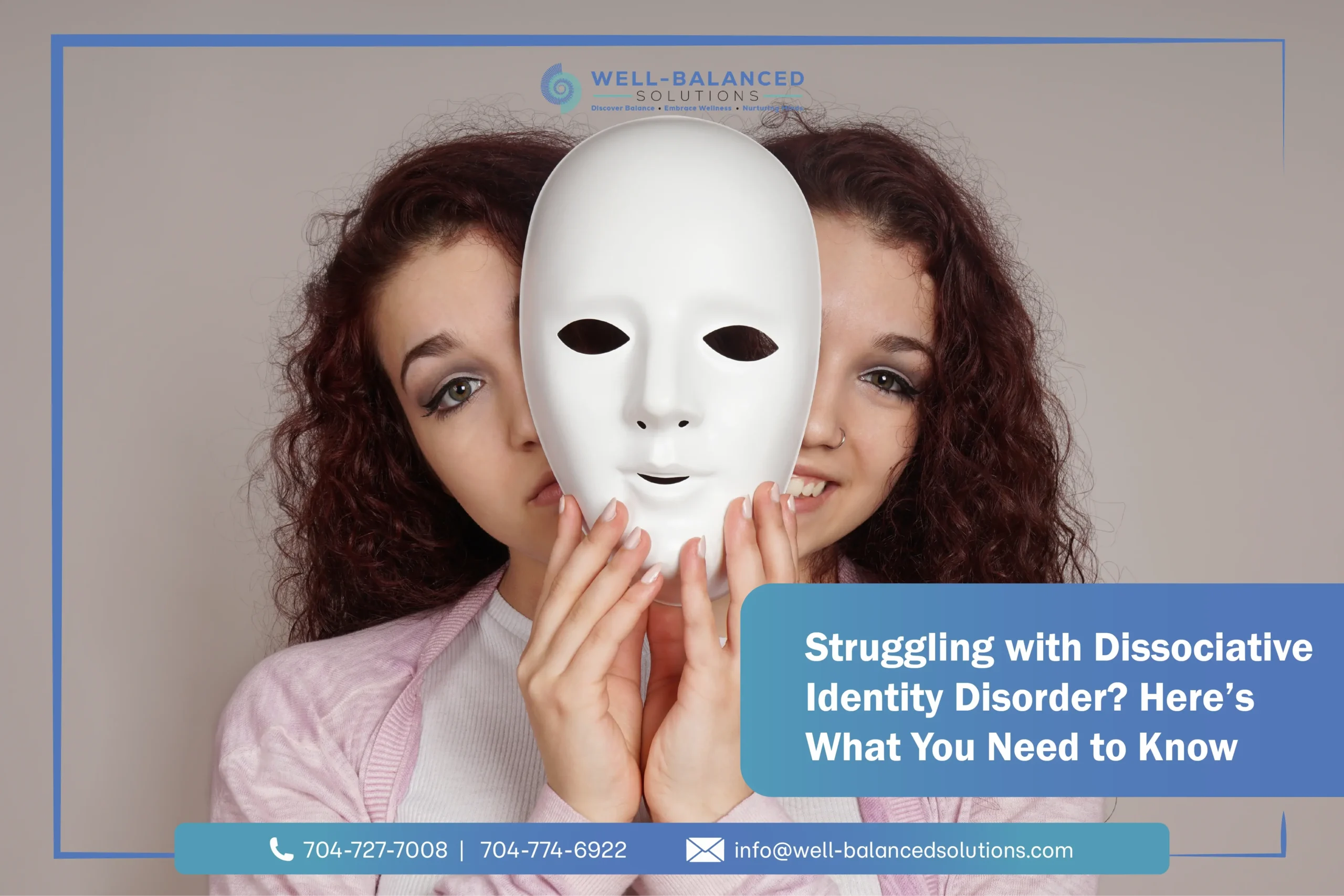
Something feels off, but you cannot name it. Time just slips away without you even noticing why. People tell you things you said, but you have no memory of them. That kind of confusion is overwhelming and frightening. Dissociative Identity Disorder is more common than most people realize. Yet thousands go undiagnosed for years.
They blame themselves. They stay silent. They suffer unnecessarily. The truth is, this condition has real causes and real solutions. Good therapy and the right support make a real difference. WBS Mental Wellness helps people like you find clarity, healing, and a path forward.
What Is Dissociative Identity Disorder, And Why It’s Often Misunderstood
Most people have never heard an accurate description of dissociative identity disorder. It is a dissociative mental health condition where a person develops more than one unique identity. Each identity can have its own voice, behavior, and memories.
Sadly, this identity disorder mental health condition gets misidentified constantly. Doctors confuse it with anxiety or psychosis. That delay costs people years of proper care.
What Causes Dissociative Identity Disorder in the First Place?
Childhood pain runs deeper than most people realize. Repeated abuse, neglect, and emotional hurt force a young mind to cope differently. Trauma-related dissociation happens when the brain separates painful memories from the true self.
This creates a severe dissociative disorder over time. The causes of DID disorder almost always trace back to early life suffering. Trauma-related DID disorder is the mind’s way of surviving the overwhelming.
Common root causes include:
- childhood physical or emotional abuse
- Chronic neglect during early developmental years
- Repeated sexual trauma in childhood
- Growing up in an unsafe or unpredictable home
- Lack of support during the trauma healing process
Dissociative Identity Disorder Symptoms You Should Never Ignore
Living with undiagnosed dissociative identity disorder symptoms is deeply isolating. People notice something is wrong but cannot explain it clearly. Emotional numbness sets in without warning. Blackouts happen in the middle of ordinary days.
Signs of dissociative identity disorder are often brushed off as stress or overthinking. However, these experiences are real, serious, and treatable. Recognizing them early makes a genuine difference in recovery.
Early Warning Signs and Common Symptoms
Dissociative disorder symptoms often appear long before a diagnosis arrives. Memory loss, amnesia, and DID are among the first red flags. Many people lose chunks of time completely.
Watch out for these early signs:
- Sudden emotional numbness with no clear reason
- Flashbacks to painful past events without warning
- DID symptoms and causes tied to early childhood trauma
- Symptoms of DID disorder are mistaken for depression or anxiety
Understanding Alters, Identity Switching, and High-Functioning DID
Alters personalities DID means different identities share one body. Each part can think, speak, and behave differently. Identity switching disorder happens when one identity takes over from another.
Sometimes a trigger causes the switch, such as a sound, smell, or memory. Notably, high-functioning DID allows some people to hold jobs and relationships. Yet inside, identity disorder and mental health struggles remain very real and very painful.
Key facts about alters and switching:
- Each alter often has its own name, age, and personality
- Switching can happen suddenly and without any warning
- Some parts carry trauma memories, others are unaware of
- High-functioning individuals may hide their condition for years
How Is Dissociative Identity Disorder Diagnosed?
Many people wonder how common dissociative identity disorder is, and the answer surprises most. Around 1.5% of the global population lives with it. However, diagnosis takes years in many cases. Doctors use the DID diagnosis criteria from the DSM-5 to assess patients properly.
A dissociative identity disorder test involves clinical interviews and a detailed psychological evaluation. DID diagnosis and symptoms must both be present before a diagnosis is confirmed. Early diagnosis genuinely leads to faster recovery and better long-term results.
Types of Dissociative Identity Disorders Explained
Not every dissociative condition looks the same. Several types of dissociative identity disorders occur across a broad spectrum. Some people meet the full criteria for DID. Others experience partial dissociation and receive an OSDD diagnosis rather. OSDD stands for Other Specific Dissociative Disorder.
Both conditions involve real suffering and need proper care. Dissociative disorder DID sits at the more complex end of this spectrum. Severe dissociative disorder affects daily functioning significantly. Meanwhile, identity disorder mental health conditions at early stages still deserve professional attention and support.
Dissociative Identity Disorder Treatments That Actually Work
Finding the right dissociative identity disorder treatments changes lives completely. Recovery is possible with proper professional guidance. Therapy takes time, but the results are genuinely life-changing. Early treatment always leads to stronger, faster recovery outcomes.
Evidence-Based Therapy Options
Psychotherapy for DID remains the most trusted and effective treatment path. Skilled therapists use several proven methods together.
Most effective therapy options include:
- Cognitive behavioral therapy for dissociative identity disorder targets harmful thought patterns directly
- EMDR helps process deeply buried traumatic memories safely
- Somatic therapy releases trauma stored physically within the body
- DID therapy treatment works best as a long-term healing investment
How to Help Someone Living With DID
Supporting a loved one through this condition takes patience and understanding. Knowing how to help someone with DID starts with simply listening without judgment. Grounding techniques can help during difficult moments of switching when they feel disconnected.
Furthermore, understanding the trauma healing process helps families respond with genuine compassion. Treatment for DID disorder works far better with a strong support system around the person.
Practical steps for careers and families:
- Learn their triggers and respond calmly without panic
- Never force them to recall traumatic memories unnecessarily
- Encourage consistent therapy attendance and professional support
- Ask their therapist how you can best support their recovery
Why Choose WBS Mental Wellness for Your DID Recovery Journey
Recovery feels impossible alone, but it does not have to be. WBS Mental Wellness brings genuine expertise and deep empathy to every client. Each person receives a personalized DID therapy treatment plan built around their unique needs. Our specialists understand the trauma healing process from the inside out.
Skilled therapists deliver trusted psychotherapy for DID in a safe, judgment-free space. Taking the first step is simpler than you think. Book your consultation with WBS Mental Wellness today and start your journey toward real, lasting recovery.
Conclusion
Living with this condition is hard, but recovery is absolutely possible. Dissociative Identity Disorder affects real people who are worthy of real support. Understanding your symptoms is the first step toward healing.
Professional help makes the journey significantly more comfortable and faster. WBS Mental Wellness is ready to walk alongside you every step of the way. Reach out today because you deserve to feel whole again.
FAQs
Is dissociative identity disorder the same as split personality?
No. Split personality is an outdated, inaccurate term. DID is a complex trauma response, not a personality split. They are completely different things.
How long does it take to get a DID diagnosis?
Most people spend between 5 and 12 years in the mental health system before receiving an accurate DID diagnosis. Misdiagnosis is extremely common.
Can someone with DID be unaware of their alters?
Yes, absolutely. Many people with DID have no awareness of their other identities at all. The main identity often has no memory of alternative activity.
Does DID make a person dangerous or violent?
No. Research clearly shows people with DID are far more likely to be victims of harm than people who cause harm. This is a harmful and widely believed myth.
Can children be diagnosed with dissociative identity disorder?
Yes. Symptoms usually begin between the ages of 5 and 10. However, most childhood cases go unnoticed and are only diagnosed properly in adulthood.
References