Many people confuse these two conditions. They share similar symptoms, but they are very different. BPD vs bipolar is one of the most searched mental health topics today. Both affect your mood, behavior, and relationships. However, their causes and treatments differ greatly. Emotional reactivity is common in both, yet it works differently in each.
One follows episodic mood disorder patterns. The other involves unstable emotions tied to identity. Getting the right diagnosis changes everything. Wrong treatment can make things worse. At WBS Mental Wellness, we help you find real answers. Understanding your condition is the first step toward healing.
BPD vs Bipolar: Key Differences Explained
These two conditions look alike on the surface. However, they work very differently inside. Borderline personality disorder stems from emotional pain and identity issues. Bipolar disorder follows mood episode cycles that shift over days or weeks.
One is rooted in relationships. The other is rooted in brain chemistry. Identity disturbance is a core sign of BPD. Bipolar disorder rarely affects how you see yourself. Understanding this difference helps you get proper care. Early clarity leads to better outcomes.
Root Causes: What Triggers Each Condition?
Both conditions develop from a mix of life experiences and biology. However, their triggers differ greatly.
- Genetic risk factors play a stronger role in bipolar disorder than in BPD
- Trauma history and childhood abuse are major triggers for borderline personality disorder
- Environmental stressors like unstable homes can worsen both conditions significantly
- Brain chemistry differences separate how each condition develops over time
Symptoms Breakdown: BPD vs Bipolar
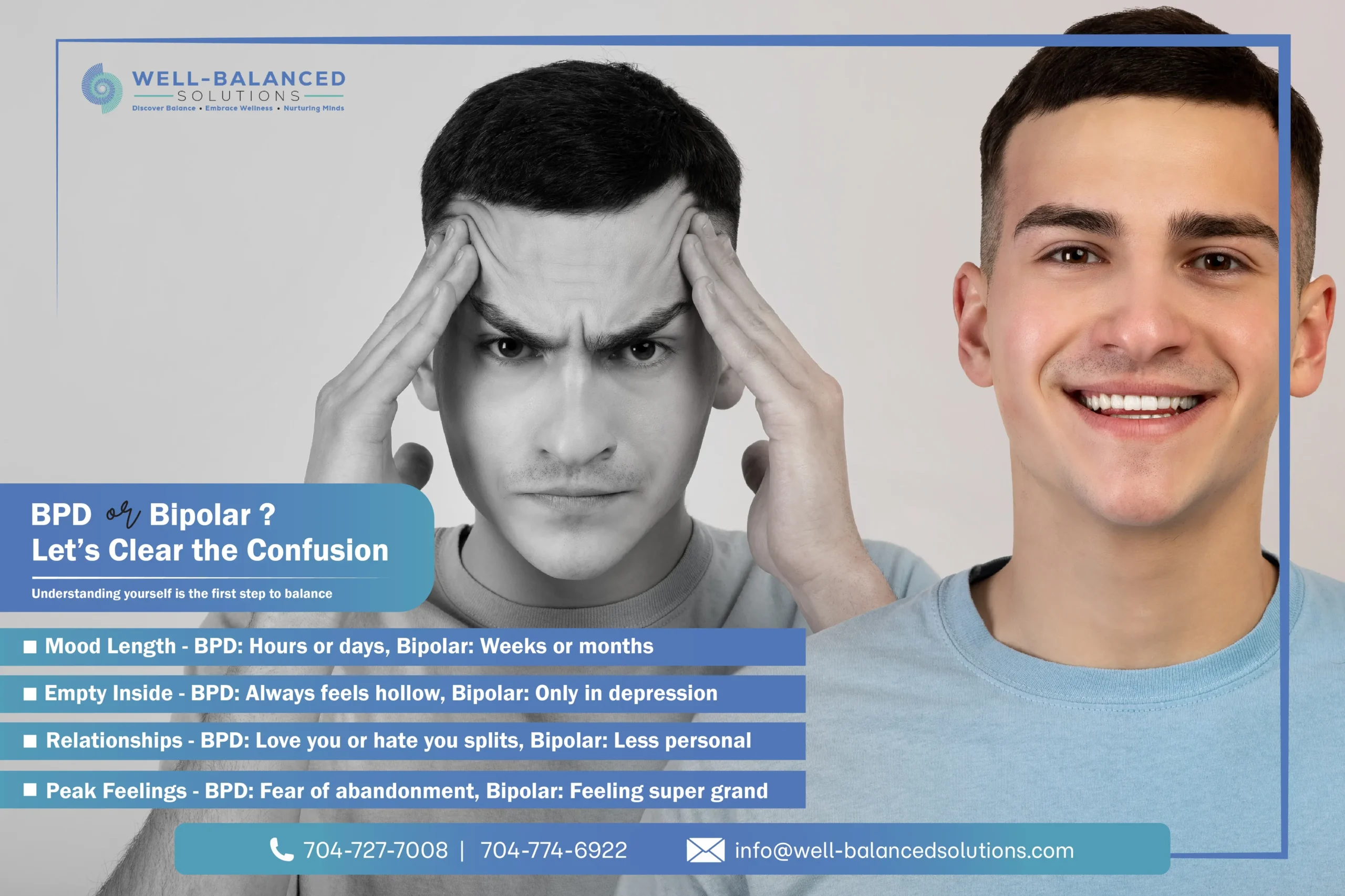
Spotting the right symptoms saves you from wrong treatment. Both conditions affect your mood deeply. Yet their symptom patterns are quite different. Chronic feelings of emptiness are a strong sign of BPD. Bipolar disorder brings extreme highs and crushing lows instead.
Interpersonal instability is another key BPD marker. Relationships feel chaotic and unpredictable every day. Bipolar symptoms follow a clearer cycle over time. Moreover, BPD and bipolar symptoms overlap in ways that confuse even doctors. Always seek a professional evaluation first.
BPD Mood Swings vs Bipolar Mood Swings
Understanding mood patterns helps separate these two conditions clearly. The differences are more important than the similarities.
- BPD mood swings shift within hours, triggered by relationships or small events
- Bipolar mood swings last days or weeks and are not linked to outside triggers.
- Reactive mood shifts in BPD are intense but short-lived compared to bipolar episodes.
- Bipolar highs involve reduced sleep and risky behavior; BPD rarely causes this.
How Is Each Condition Diagnosed? Tests & Evaluation
Diagnosis is never simple for either condition. Doctors use the DSM-5 evaluation to identify both disorders accurately. There is no single blood test or brain scan available. Instead, clinicians rely on structured interviews and detailed symptom history. A BPD vs. bipolar test involves careful psychological assessments over time.
Furthermore, manic depression vs. BPD requires close observation of mood patterns and behavior. Misdiagnosis is very common without a proper evaluation. Therefore, always consult a licensed mental health professional. Early and accurate diagnosis leads to faster recovery.
Which Is Worse: Bipolar or BPD?
Neither condition is “worse” than the other. Both cause real pain and daily challenges. However, which is worse, bipolar or BPD, depends on the individual. BPD brings constant emotional turmoil and relationship struggles every single day. Bipolar disorder causes severe mood episodes that can disrupt work and life.
Additionally, both conditions carry serious risks without proper treatment. Suffering is not a competition. Instead, focus on getting the right support. Every person deserves compassionate and personalized mental health care today.
What Is the Difference Between Bipolar and Borderline Personality Disorder?
This question deserves a clear and honest answer for every reader.
- Bipolar disorder involves distinct mood episodes of mania and depression lasting days or weeks.
- Borderline personality disorder involves rapid emotional shifts triggered by relationships and daily stress.
- Bipolar disorder is primarily a mood disorder rooted in brain chemistry and genetic patterns.
- BPD is a personality disorder shaped by trauma, attachment issues, and identity struggles
Treatment Options: Therapy, Medication & Emerging Solutions
Treatment works differently for each condition. Dialectical behavior therapy is the gold standard for BPD. It teaches emotional regulation and healthy coping skills. Bipolar disorder responds well to mood stabilizers and antipsychotic medication. Furthermore, talking therapies support long-term recovery for both.
Recently, transcranial magnetic stimulation (TMS) has shown promising results for treatment-resistant cases. This non-invasive approach is changing modern mental health care. Therefore, exploring all available options is essential. Professional guidance ensures you choose the safest and most effective path forward.
Can You Have Both BPD and Bipolar at the Same Time?
Yes, having both conditions simultaneously is possible. Clinicians call this a co-occurring or comorbid diagnosis. Many people feel confused because their symptoms match both disorders. Moreover, overlapping traits make diagnosis even more complex. Consequently, some individuals receive the wrong treatment for years.
A thorough psychiatric evaluation identifies both conditions accurately. Treating one without addressing the other rarely brings full relief. Therefore, always share your complete symptom history with your doctor. Proper dual diagnosis leads to better, lasting mental wellness outcomes.
Why Choose WBS Mental Wellness
Living with an undiagnosed condition is exhausting. Every wrong treatment costs you time, money, and emotional energy. Most people wait years before finding the right help. That ends here. WBS Mental Wellness brings together licensed psychiatrists, therapists, and mental health specialists under one roof.
We do not offer generic solutions. Instead, every care plan is built around your specific symptoms, history, and goals. Real recovery starts with the right team beside you.
Your Recovery. Our Expertise. Real Results.
- Comprehensive Psychological Assessment: DSM-5-based evaluations that accurately separate BPD from bipolar disorder—no guesswork, just clarity
- Evidence-Based Therapy: Dialectical Behavior Therapy (DBT), Cognitive Behavioral Therapy (CBT), and trauma-informed care tailored to your needs
- Expert Medication Management: Careful psychiatric oversight with regular monitoring, personalized dosage, and ongoing adjustments for best results
- Long-Term Recovery Support: Structured follow-up plans designed to sustain your progress, prevent relapse, and rebuild your quality of life
Book your confidential consultation with WBS Mental Wellness today. Our specialists will walk you from uncertainty to clarity and from daily struggle to lasting progress. One decision. One call. A thoroughly different life ahead.
FAQs
Does BPD get worse with age if left untreated?
Yes, untreated BPD can become more intense over time. However, with proper therapy and support, many people show significant improvement as they grow older.
Can bipolar disorder cause fear of abandonment like BPD?
No. Fear of abandonment is a core BPD trait. Bipolar disorder does not typically cause this pattern. It is one of the clearest differences between the two conditions.
Is self-harm more common in BPD than in bipolar disorder?
Yes. Self-harm behaviors appear far more frequently in BPD. In bipolar disorder, risky behavior usually occurs during manic episodes, not as emotional pain responses.
At what age does BPD or bipolar disorder usually begin?
BPD symptoms often appear in early teenage years. Bipolar disorder commonly develops in the late teens or early twenties. Early diagnosis in both conditions leads to better outcomes.
Can stress alone trigger a bipolar episode like it does in BPD?
Stress can worsen bipolar symptoms but rarely triggers full episodes alone. In BPD, however, even minor stress or relationship tension can spark immediate and intense mood shifts.
Conclusion
Understanding the difference between these two conditions is truly life-changing. Both BPD and bipolar disorder deserve proper attention and care. Moreover, getting the wrong treatment can delay your recovery significantly. Comparing BPD vs. bipolar helps you ask the right questions.
Always seek professional guidance instead of self-diagnosing online. Furthermore, early intervention leads to better outcomes and a healthier mind. Your mental health journey matters deeply. Take action today and get the clarity you deserve.
Reference