You have tried therapy, yet old trauma still controls your reactions. Your body tenses before your mind even understands why. Talk therapy helps you understand your past, but that fear stays stuck inside you. This happens because trauma often lives deeper than words can reach.
Deep Brain Reorienting offers a different path toward lasting relief. This brain-based approach works with your nervous system, not just your memories. This approach targets the root cause, not just surface symptoms. Many people finally feel real change after years of frustration. Healing starts where trauma actually began, not where you talked about it.
What Is Deep Brain Reorienting?
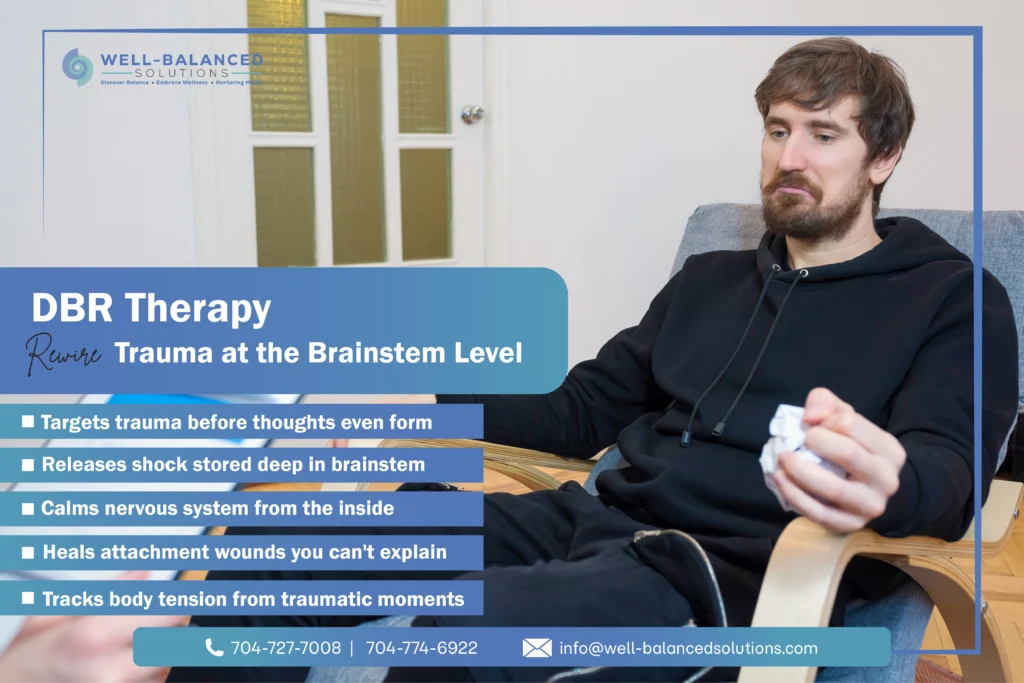
Trauma often leaves the nervous system stuck in survival mode. Deep Brain Reorienting addresses this problem at its earliest root. This trauma-focused therapy targets the earliest survival responses in the brain.
Psychiatrist Frank Corrigan developed this brain-based trauma therapy, drawing on neuroscience of the brainstem’s threat response. Rather than reviewing memories, sessions focus on subtle bodily sensations. Most conventional counseling addresses thoughts, feelings, or detailed accounts of events.
This method instead begins where the nervous system first reacts to danger. Such a shift makes the approach unique among modern trauma treatments. Clients often find relief without recounting painful details repeatedly.
How Does Deep Brain Reorienting Work?
The brain moves through a fixed sequence during any shocking event. This process starts in deep, primitive structures rather than the thinking mind. Subcortical trauma processing occurs before a single emotion forms.
The body reacts first, and awareness follows only afterward. This brainstem trauma sequence explains why trauma feels physical, not just mental. Therapists trained in this method track that exact pattern with clients.
The Orienting-Shock-Affect Sequence
Three brainstem regions activate in rapid order during a threat. Each stage builds on the last, shaping the body’s full response. Understanding this bottom-up trauma processing helps explain why reactions often feel automatic and overwhelming, even years after danger has passed.
- Orienting response: The superior colliculus turns the eyes and head toward danger before thought occurs.
- Shock response: The locus coeruleus triggers a sudden jolt through the nervous system.
- Affective response: The periaqueductal gray shapes the emotions that follow the initial shock.
- Together, these three stages form one continuous survival pattern the body remembers.
Benefits of Deep Brain Reorienting Therapy
Research shows real, measurable results for many trauma survivors today. A randomized controlled trial DBR study tested this method against a waitlist group. Results showed strong gains using the CAPS-5 scale across every symptom category.
Nervous system regulation improved significantly among participants who completed treatment. Somatic trauma therapy approaches like this often support the body, not just thoughts.
Autonomic regulation therapy also plays a role, calming an overactive stress response. Many clients report lasting change rooted in polyvagal theory principles.
- Significant symptom reduction confirmed through peer-reviewed clinical research.
- Roughly half of participants no longer met PTSD criteria afterward
- Very low dropout rate compared to many other trauma therapies
- Gentle format works well for people sensitive to retraumatization
- Effects held steady, and even improved, 3 months after treatment
Ready to feel steady again?
Real results like these are why WBS Mental Wellness clients choose this path toward lasting recovery.
Benefits of Deep Brain Reorienting Therapy
Certain trauma patterns respond especially well to this gentle approach. People with complex PTSD treatment needs often feel unheard by standard therapy. Attachment trauma therapy clients carry tension rooted in early relationships.
Others face treatment-resistant anxiety despite trying multiple methods already. Dissociation therapy becomes necessary when clients feel disconnected from their bodies. Persistent hyperarousal keeps the body locked in constant alert.
A strong panic response or heightened startle sensitivity often points to unresolved shock. A lingering freeze response can also signal this deeper pattern.
DBR vs. EMDR: How It Compares
Comparing treatment options helps clarify which approach fits your needs best. Many clients search for an EMDR alternative therapy after limited results. Both methods work as trauma reprocessing therapy, yet their methods differ sharply.
EMDR often uses guided eye movements alongside detailed memory recall. This approach instead targets the shock response before emotions even form. Implicit memory reconsolidation may explain why physical sensations shift after sessions.
Sessions require little narrative detail, unlike many memory-focused protocols. Choosing between them often depends on personal comfort levels.
Key Differences at a Glance
| Factor | This Approach | EMDR |
|---|---|---|
|
Focus |
Brainstem shock and orienting response |
Memory reprocessing |
|
Narrative required |
Minimal |
Some recounting |
|
Pace |
Slow, body-led |
Structured, protocol-driven |
|
Best fit |
Stuck physical trauma responses |
Broad PTSD presentations |
Virtual DBR Therapy Sessions: What to Expect
Distance no longer limits access to specialized trauma care today. Sessions happen through secure video calls, similar to standard telehealth visits. This format supports telepsychiatry PTSD treatment for clients across Virginia and North Carolina.
Virtual trauma therapy allows the same careful pacing as in-person sessions. Clients still track bodily tension while sitting comfortably at home. A private, quiet space helps sessions feel safe and focused. Providers guide the process step by step, just as they would in person. Many clients find virtual care just as effective.
How Deep Brain Reorienting Fits Into a Complete Treatment Plan
Lasting recovery rarely comes from one single method alone. A full psychiatric evaluation helps identify every factor affecting your symptoms. Medication management may address anxiety or depression running alongside trauma. Pharmacogenetic testing can guide safer, more accurate prescribing decisions too.
Research collaborations, including work involving Dr. Ruth Lanius, continue shaping this field. Coordinated care connects therapy, medication, and ongoing symptom tracking. This combined strategy often produces steadier, more complete healing over time. A personalized plan adjusts as your needs change throughout treatment.
Why Choose WBS Mental Wellness
WBS Mental Wellness combines thorough evaluation with personalized psychiatric care. Licensed providers coordinate trauma-informed treatment rather than offering medication alone. Telepsychiatry access serves clients throughout Virginia and North Carolina conveniently.
Every treatment plan reflects your specific symptoms, history, and goals. This dedicated approach helps clients move toward real, lasting recovery.
- Comprehensive diagnostic evaluation before any treatment begins
- Licensed psychiatric providers experienced in trauma-informed care
- Convenient telepsychiatry across Virginia and North Carolina
- Personalized medication management, including pharmacogenetic testing
- Coordinated support connecting therapy, medication, and follow-up care
Ready to Start Healing?
Your next chapter does not have to wait any longer. Book a session with a provider who understands trauma fully.
Conclusion
Deep Brain Reorienting offers a gentle, science-backed path toward healing. This approach addresses trauma at its earliest, physical starting point. Clients gain relief without repeatedly reliving painful memories in detail.
Strong research results and low dropout rates support its growing use. Paired with complete psychiatric care, recovery becomes more attainable. Reach out today to explore whether this approach is a good fit for you.
Frequently Asked Questions
Preparation usually takes 3 to 4 sessions before deeper work begins. Clinical trials used 8 sessions, though individual needs vary based on trauma complexity.
Coverage varies by insurance plan and provider. Many psychiatric and therapy services qualify for partial reimbursement, so confirm details directly with your insurance carrier.
Yes, providers often integrate DBR alongside EMDR, somatic experiencing, or talk therapy, creating a layered treatment plan tailored to each client's specific trauma history.
Yes, DBR uses slow pacing and grounding techniques designed to prevent overwhelm. Therapists carefully monitor nervous system responses throughout each session for safety.
Some clients report reduced chronic pain and fatigue after DBR sessions. Releasing stored shock may ease physical tension linked to unresolved trauma responses.