
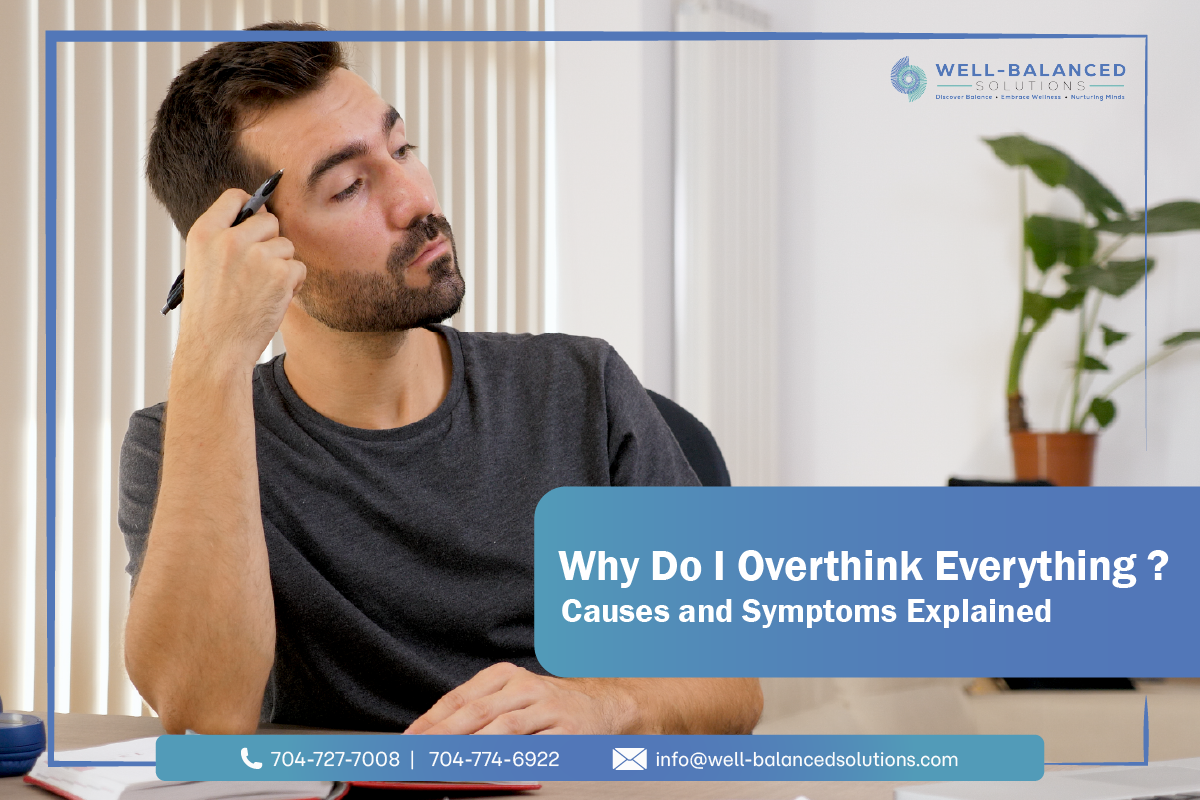
Your brain replays that conversation again. It is 2 AM, and you are still wide awake. Sound familiar? Many people ask, Why do I overthink everything, and the answer is not as simple as “just stop.” Overthinking, known clinically as rumination, pulls your mind into a loop that feels impossible to break.
It drains your energy before the day even begins. Research shows nearly 73% of adults aged 25 to 35 experience this daily. However, understanding what drives an overactive mind is the first step towards real relief. WBS Mental Wellness helps you do exactly that.
What Is Overthinking?
Constant thoughts about past mistakes or future fears signal overthinking. Your brain enters a cognitive loop, searching for answers that never arrive. Catastrophizing every situation makes this pattern worse.
Habitual thought patterns train your mind to expect the worst automatically. Furthermore, causes of overthinking often include unresolved stress and underlying fear. This cycle feels uncontrollable. However, recognizing it early gives you a genuine chance to break free.
Signs and Symptoms of Overthinking
Overthinking shows up differently in every person. Some feel it in their mind, others in their behavior, and many feel it physically too. Overactive mind symptoms affect your mood, sleep, and daily focus all at once. Furthermore, anxiety and overthinking often appear together, making it harder to function daily.
Mental and Emotional Symptoms
Second-guessing every decision drains your mental energy fast. Decision paralysis makes even simple choices feel impossible. However, these signs are more common than most people realize.
- Inability to concentrate on daily tasks
- Worst-case scenarios playing on repeat
- Constant self-doubt and second-guessing
- Overthinking anxiety symptoms like fear and worry
- Mental exhaustion that never fully goes away
Behavioural Symptoms
Behavioral changes often go unnoticed at first. Procrastination grows when your mind stays stuck in loops. Moreover, validation-seeking becomes a daily habit without your realizing it.
- Avoiding decisions due to decision paralysis
- Missing deadlines because of mental overload
- Social withdrawal from friends and family
- Reassurance seeking from others repeatedly
- Replaying conversations long after they happen
Physical Symptoms
Many people overlook what overthinking does to the body. Stress headaches appear more frequently over time. Besides, chronic fatigue and muscle tension are common physical signs.
- Persistent muscle tension across the shoulders and neck
- Fatigue that sleep does not fully restore
- Stress headaches triggered by mental overload
- Disrupted sleep from nighttime anxiety
- Shallow breathing during anxious thought spirals
Why Do I Overthink Everything? 5 Root Causes
Understanding why your brain won’t stop thinking is the first step. Overthinking rarely has one single cause. Moreover, several deeper triggers work together silently. Identifying your personal root cause helps you find the right path forward.
Anxiety and Stress
Chronic stress keeps your threat-detection system permanently switched on. Your mind scans for danger even when none exists. However, anxiety and stress together create the perfect environment for rumination to grow deeper every day.
Fear of Uncertainty
Uncertainty feels deeply uncomfortable to an overthinking mind. Your brain constantly searches for guarantees that life cannot provide. Furthermore, this fear of uncertainty pushes you into endless mental loops seeking control over uncontrollable outcomes.
Perfectionism
Setting impossibly high standards quietly fuels overthinking. Every small mistake feels catastrophic when perfectionism drives your thinking. Besides, overanalyzing past actions becomes a daily habit, making you your own harshest critic without realizing it.
Past Experiences and Trauma
Difficult past experiences reshape how your brain processes daily situations. Trauma connection runs deep, your mind replays old pain, trying to prevent future hurt. Nevertheless, healing begins the moment you recognize this pattern clearly.
Your Brain’s Default Mode Network
Your Default Mode Network activates during rest and self-focused thinking. Neural pathways strengthen every time you repeat a thought pattern. As a result, chronic overthinking feels completely automatic, not a character flaw, but a deeply practiced brain habit.
Reflection vs Overthinking: What Is the Difference?
Not every deep thought is harmful. Reflection moves you forward, whilst overthinking keeps you stuck in the same loop. Moreover, productive thinking vs rumination is a difference most people never recognize. Ask yourself one honest question: Am I solving something, or seeking certainty I cannot control?
| Reflection | Overthinking |
|---|---|
|
Leads to clarity |
Creates confusion
|
|
Produces action
|
Causes paralysis
|
|
Feels resolving
|
Feels exhausting |
|
Moves forward |
Stays stuck |
|
Builds confidence |
Increases self-doubt |
How Overthinking Affects Your Daily Life
Overthinking does not stay inside your head. It quietly damages every area of your life. Furthermore, the longer it continues, the harder daily functioning becomes.
Sleep and Nighttime Anxiety
Nighttime anxiety hits hardest when everything goes quiet. Insomnia from overthinking leaves your body exhausted, but your mind fully awake.
Relationships
Reassurance seeking strains even the strongest relationships over time. Social withdrawal grows slowly, pushing people away without any intention.
Work and Productivity
Mental noise makes concentrating at work genuinely difficult. Moreover, procrastination deepens when every decision feels overwhelmingly uncertain.
Emotional Well-being
Mental exhaustion builds quietly beneath the surface. However, recognizing emotional patterns early significantly protects your long-term well-being.
How to Stop Overthinking: 6 Evidence-Based Strategies
Breaking the overthinking cycle takes consistent practice. No single method works for everyone. However, these evidence-based strategies genuinely interrupt repetitive thought patterns and restore mental clarity over time.
Cognitive Behavioral Therapy (CBT)
CBT for overthinking directly targets harmful thought patterns. It teaches you to challenge distorted thinking with real evidence. Furthermore, reframing thoughts becomes natural with regular practice.
Mindfulness-Based Cognitive Therapy (MBCT)
MBCT teaches decentering thoughts, observing them without reacting. Moreover, mindfulness-based cognitive therapy significantly reduces rumination according to multiple meta-analyses.
Grounding 5-4-3-2-1 Technique
The 5-4-3-2-1 grounding technique anchors you instantly in the present moment. Try it now:
- 5 things you see
- 4 things you touch
- 3 things you hear
- 2 things you smell
- 1 thing you taste
Scheduled Worry Time
Scheduled worry time includes anxious thoughts within a single daily 20-minute window. Besides, this prevents mental noise from spreading across your entire day.
Regular Aerobic Exercise
Exercise and rumination have a powerful relationship. Regular aerobic activity reduces repetitive negative thinking more effectively than willpower alone.
Journaling and Thought Challenging
Journaling externalizes thoughts that feel impossible to escape mentally. Nevertheless, acceptance-based approach writing helps you identify patterns and gradually release them.
Still Stuck in the Overthinking Loop?
Reading strategies help. However, applying them alone is not always easy. WBS Mental Wellness connects you with qualified professionals who deeply understand your thought patterns. You deserve real support, not just advice.
When to Seek Professional Help for Overthinking
Sometimes, self-help strategies are simply not enough. If overthinking consistently disrupts your sleep, work, or relationships, professional support can make a real difference. Conditions like generalized anxiety disorder, depression, social anxiety, and panic disorder often fuel persistent rumination.
Moreover, EMDR therapy works particularly well when past trauma drives your thought loops. A qualified mental health professional helps you identify what therapy helps with overthinking and builds a plan tailored specifically for you.
Why Choose WBS Mental Wellness?
Living with an overactive mind is exhausting. WBS Mental Wellness provides personalized, evidence-based care for people struggling with anxiety, rumination, and mental overthinking that cause daily issues.
Our qualified professionals deeply understand your thought patterns. Moreover, every care plan is tailored specifically to your needs, not a generic solution. You deserve compassionate support that actually works.
- Qualified mental health professionals
- Evidence-based CBT and MBCT treatment
- Personalized care plans for every individual
- Supportive environment for lasting recovery
Your path to a more peaceful mind starts with one small step. Take that step today, real help is closer than you think.
Conclusion
Overactive mind symptoms affect millions of people worldwide. Understanding the causes of your mental overthinking, whether stress, trauma, or deep-rooted thought patterns, gives you genuine power to change.
Practical strategies like CBT, mindfulness, and centering techniques work when applied consistently. Peace comes not from having every answer, but from knowing what is yours to carry. Explore more resources on mental wellness at WBS Mental Wellness.
Frequently Asked Questions
Yes. Chronic overthinking triggers stress responses, causing muscle tension, persistent headaches, and fatigue that sleep cannot fully restore.
Yes. ADHD makes filtering mental noise harder, causing racing thoughts and making rumination significantly more frequent and intense daily.
No. Research shows that overthinking decreases significantly with age; adults over 60 experience far less rumination than younger adults.
Yes. Constant reassurance seeking and social withdrawal gradually create emotional distance, pushing loved ones away without conscious intention.
No. Overthinking reflects deeply wired brain patterns, not weakness. It affects millions of intelligent, capable people every single day.