
Loneliness often remains hidden behind the normal routines of men’s daily lives. Many people feel emotionally disconnected while still managing work and responsibilities. The male loneliness epidemic highlights growing isolation caused by weak friendships, emotional suppression, and social pressure.
Moreover, cultural expectations often stop men from sharing feelings, which slowly increases emotional distance. However, this challenge can be improved through awareness, stronger social bonds, and mental health support.
WBS Mental Wellness explains that recognizing emotional struggle is the first step toward healing, better relationships, and rebuilding meaningful human connections in everyday life.
What Is the Male Loneliness Epidemic?
The male loneliness epidemic refers to growing emotional and social isolation among men today. The male loneliness epidemic describes a lack of friendships, emotional support, and connection in modern life.
The term male loneliness epidemic is widely discussed in mental health research and the media. It was not coined by one single person but evolved through social studies. Who coined the term male loneliness epidemic remains debated among experts globally today overall.
Male Loneliness Statistics in 2026
Male loneliness statistics show rising emotional isolation, weaker friendships, and increasing mental health challenges among men globally. Research highlights growing loneliness linked with reduced emotional well-being, higher depression rates, and stronger social isolation trends today.
Friendship Decline Among Men
Men are experiencing fewer close friendships, increasing emotional distance, and reduced support networks over time.
- Around 15-20% men report no close friends
• Friendship networks have declined since 1990
• Emotional support mainly comes from partners
• Social isolation increases with age
• Loneliness statistics show a steady upward trend
Male Suicide and Mental Health Statistics
Suicide rates among men remain significantly higher than those of women globally, reflecting serious mental health crisis concerns.
- Men account for nearly 80% suicide deaths
• Depression rates are rising in young males
• Emotional well-being remains underreported
• Mental health crisis linked with isolation
• Suicide rates are increasing in working-age men
Young Men and Emotional Isolation
Young men face growing emotional isolation due to digital life, pressure, and weak real-world connections.
- Increased loneliness in ages 15-34
• Strong rise in social isolation cases
• Emotional wellbeing affected by online life
• Comparison shows higher stress in females
• Mental health crisis growing in youth
Why Is There a Male Loneliness Epidemic?
Modern society shows a clear cause of the male loneliness epidemic across generations today. Emotional suppression, digital habits, and lifestyle pressure all strongly shape isolation patterns now. However, changing expectations and reduced social bonding make loneliness more visible in men globally.
Emotional Suppression and Masculinity
Boys do not cry messaging creates emotional stigma from early childhood experiences in life. Therefore, vulnerability fears grow while masculine expectations limit emotional expression in adult relationships today.
Decline of Male Friendships
Fewer close friends develop due to adulthood isolation and career-focused lifestyle pressures increasing daily. Moreover, remote work reduces interaction, weakening friendships and increasing social distance among men today.
Fewer close friends develop due to adulthood isolation and career-focused lifestyle pressures increasing daily. Moreover, remote work reduces interaction, weakening friendships and increasing social distance among men today.
Social Media and Digital Isolation
Doom scrolling and screen addiction reduce real-life communication and emotional bonding over time significantly. Additionally, online validation replaces genuine relationships, increasing emotional disconnection and social isolation in men.
Take the First Step Toward Support
If loneliness has been feeling heavier than usual, you do not have to deal with it alone. Talking to someone and getting the right guidance can make things feel lighter and more manageable. WBS Mental Wellness is here to help you rebuild emotional strength, clarity, and meaningful connection in your daily life.
Dating Pressure and Rejection
Modern dating struggles increase fear of rejection and emotional insecurity among men today. However, emotional challenges differ individually and should not be linked to one gender alone.
Toxic Online Communities and the Manosphere
Andrew Tate’s culture and misogyny-based content spread anger-driven ideas across online spaces today. Consequently, toxic masculinity and manosphere narratives increase emotional disconnection in modern masculinity globally now.
Is the Male Loneliness Epidemic Self-Inflicted
The male loneliness epidemic is shaped by emotional, social, and cultural pressures in modern life. Some habits may contribute, but it is not self-inflicted alone in reality. Emotional stigma, masculine expectations, and reduced friendships all increase disconnection in daily life.
However, social environment and digital behaviour also play a strong role in isolation. Therefore, a balanced view is needed without unfairly blaming individuals today overall.
When Did the Male Loneliness Epidemic Start?
The male loneliness epidemic began gradually through long-term social and cultural changes over decades. It did not start suddenly but evolved with shifting masculinity norms and modern lifestyle patterns.
Industrial work, reduced community bonding, and increasing digital dependence increased emotional distance. Over time, fewer friendships and weaker social support systems deepened isolation. Therefore, loneliness among men developed slowly through societal change, not one single event today.
Male Loneliness Epidemic Solutions
Male loneliness epidemic solutions focus on rebuilding social connections and emotional awareness in daily life. Men can improve their well-being through friendships, community groups, and open communication habits. Regular social interaction reduces isolation and strengthens emotional resilience over time.
Professional support and therapy also help manage stress and emotional disconnection effectively. In general, consistent effort in relationships and lifestyle changes improves mental health and connection today.
What Society Gets Wrong About Male Loneliness
Society often misunderstands the male loneliness epidemic and treats loneliness as a weakness instead of an emotional need today. Loneliness is not weakness, and empathy matters for healthy human connections across all genders.
Emotional support should not be gendered because both men and women experience loneliness differently in life. However, social stigma prevents open discussion, increasing emotional distance and misunderstanding in relationships and communities overall.
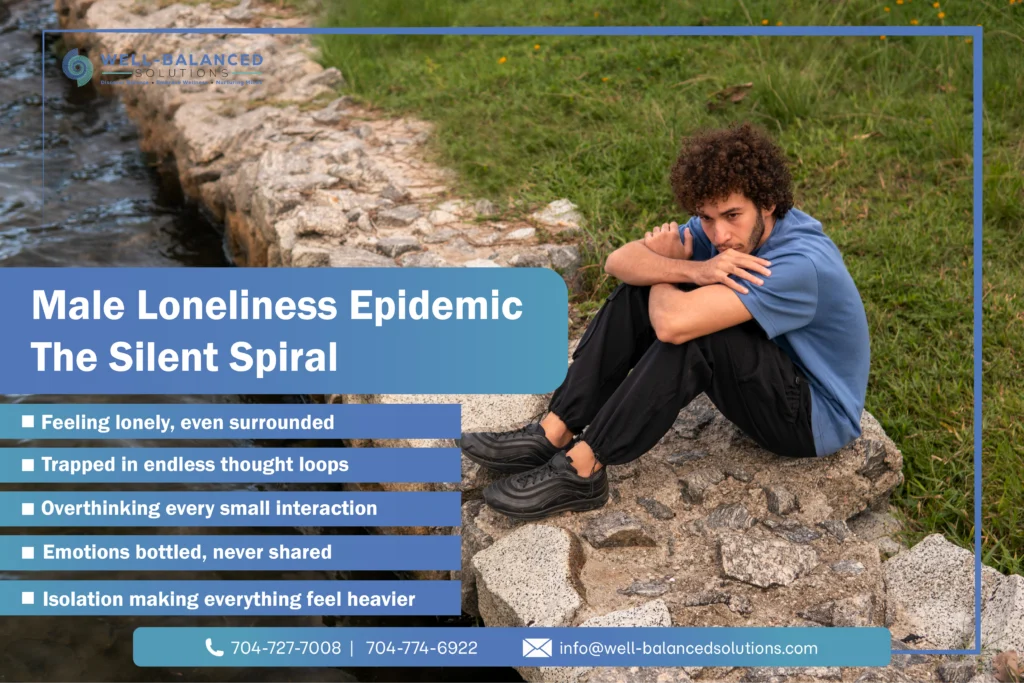
Why Choose WBS Mental Wellness for Male Loneliness Support?
WBS Mental Wellness focuses on real human experiences behind the male loneliness epidemic with a practical understanding today. It highlights emotional well-being, social disconnection, and supportive guidance for men facing isolation.
The approach is simple, research-based, and focused on real-life emotional struggles. It helps readers understand loneliness in a balanced and compassionate way without judgment.
- Evidence-based mental health understanding
- Focus on emotional support and connection
- Practical and relatable guidance style
- Compassionate and balanced perspective
Take the First Step Toward Better Mental Well-being Today
You don’t need to handle loneliness alone in silence anymore. Real support can help you rebuild connection and confidence in daily life. Small steps today can lead to stronger emotional well-being tomorrow.
Conclusion
The male loneliness epidemic reminds us that emotional well-being depends on human connection and understanding today. Hope comes through empathy, communication, and rebuilding trust in relationships across society.
Men and women both need support, as loneliness affects everyone in different ways. Therefore, a balanced perspective helps create stronger emotional health and meaningful human connections for a better future overall.
Frequently Asked Questions
The male loneliness epidemic means men are experiencing emotional isolation, weak friendships, and reduced social support in modern daily life.
Men feel lonely due to emotional suppression, busy routines, and fewer deep friendships in today's adult social life.
The male loneliness epidemic is supported by research showing rising social isolation and mental health concerns among men today.
Main causes include weak friendships, emotional stigma, modern lifestyle pressure, and reduced face-to-face communication in society.
Men can reduce loneliness by building friendships, joining groups, sharing feelings, and seeking support when needed today.