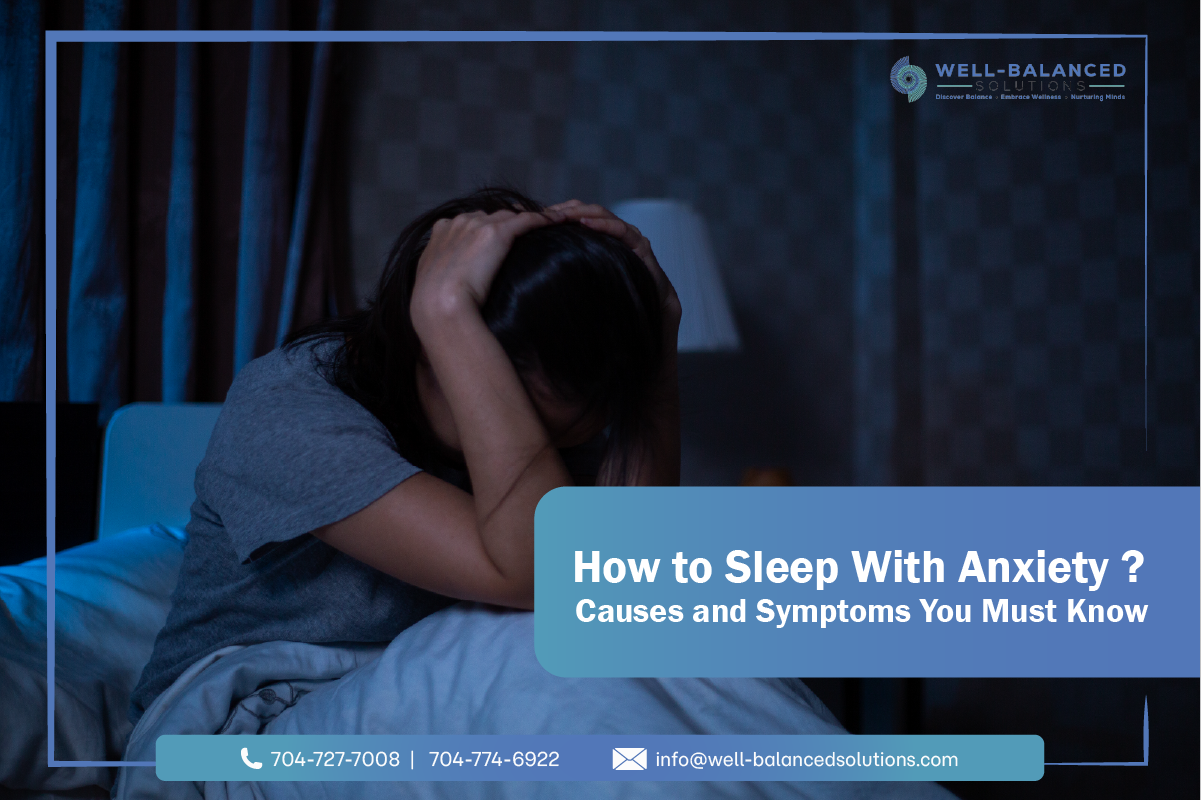
Lying awake at night feels exhausting and lonely. Your body is tired, but your mind keeps running. Worries pile up fast: tomorrow’s meeting, unpaid bills, unfinished conversations. Everything feels heavier once the lights go down. Millions of people struggle with sleep problems due to anxiety every single night.
However, knowing how to sleep with anxiety changes everything. Simple, proven steps can break this cycle for good. Understanding what is happening inside your body is where real relief begins. At WBS Mental Wellness, we break down the causes, the warning signs, and what genuinely works.
Why Does Anxiety Stop You From Sleeping?
Two powerful forces control your sleep every night. First is sleep pressure, which builds the longer you stay awake. Second is your alerting signal, which follows your circadian rhythm. Anxiety hijacks this alerting signal completely.
Your amygdala detects a perceived threat and triggers an immediate cortisol spike. This increases sleep-onset latency, meaning it takes much longer to fall asleep. Moreover, your autonomic nervous system stays locked in fight-or-flight mode.
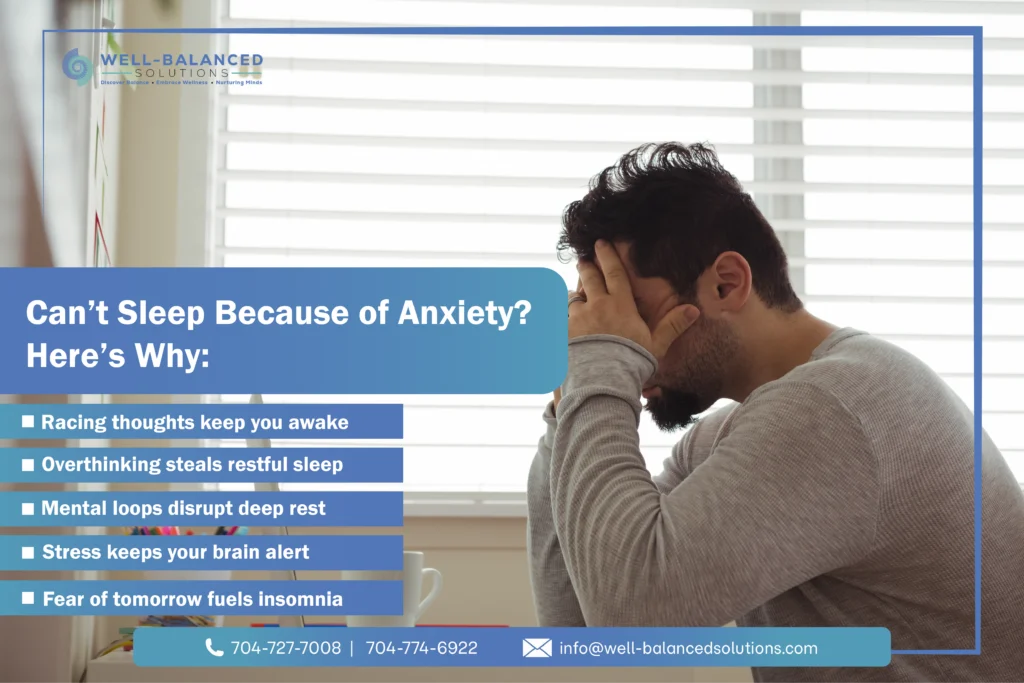
Your body simply cannot downregulate enough to rest. Sleep anxiety runs deeper than most people realize. Sleep problems due to anxiety follow a clear pattern: anxiety disrupts sleep, poor sleep worsens hyperarousal, and the cycle repeats. Breaking it starts with understanding it.
Recognizing Symptoms of Sleep Anxiety: Do You Have These?
Anxiety and insomnia symptoms often go unnoticed for weeks. However, your body sends clear warning signs early. Racing thoughts and insomnia feel different from ordinary tiredness; they are persistent, have patterns, and are deeply disruptive. Check these signs honestly:
- Falling asleep feels impossible: even when your body is completely exhausted
- Racing thoughts intensify at bedtime: rumination takes over the moment your head hits the pillow
- Dread builds before bed: that heavy, sinking feeling of “dreading the bed” arrives every evening
- Frequent waking between 2–3 am: high wakefulness after sleep onset (WASO) leaves you staring at the ceiling
- Disturbing dreams during REM sleep: vivid nightmares that jolt you awake repeatedly
Sleep reactivity and hyperarousal keep your nervous system on high alert all night. Moreover, feeling unrested after a full night is a strong indicator that warrants serious attention.
If these symptoms occur on three or more nights per week for more than a week, they are beyond everyday stress. It is a recognizable clinical pattern and requires targeted attention, not simply better willpower.
Types of Sleep Anxiety: Know Exactly What You're Dealing With
Sleep problems due to anxiety come in different forms. Identifying your specific type makes treatment far more effective and targeted.
General Nighttime Anxiety
Worries about work, relationships, and daily life flood your mind at bedtime. Your circadian rhythm drops the alerting signal, giving these thoughts room to dominate completely.
Sleep Anxiety Disorder
This goes beyond general worry. Fear centers specifically around sleep itself, dreading nightmares, sleep paralysis, or simply not falling asleep. Sleep reactivity is highest in this group.
Insomnia Linked to Anxiety
Anxiety-driven insomnia starts acutely, within three months. However, without intervention, it becomes chronic, three or more nights weekly for three-plus months. Low sleep efficiency becomes a measurable warning sign.
Nocturnal Panic Attacks
Sudden waking with intense fear, racing heartbeat, and shortness of breath, with no obvious trigger. Research shows that up to 71% of panic disorder patients experience nocturnal panic attacks. GAD sufferers face this most frequently.
What To Do RIGHT NOW: Tonight's Anxiety Relief Guide
Bedtime anxiety relief does not have to wait weeks. These techniques activate your parasympathetic nervous system within minutes. Start tonight, right now if needed.
4-7-8 Breathing Technique: Step by Step
How to relax before bed: anxiety starts with controlling your breath. This simple method calms your nervous system fast.
- Inhale through your nose for 4 counts
- Hold your breath for 7 counts
- Exhale slowly through your mouth for 8 counts
- Repeat 3 to 4 cycles back to back
- Notice your cortisol dropping and body softening within minutes
5-4-3-2-1 Grounding Technique
Racing thoughts and insomnia respond well to grounding. This method immediately pulls your mind back to the present moment.
- Spot 5 things you can currently see around you
- Touch 4 surfaces and notice each texture carefully
- Listen for 3 distinct sounds in your environment
- Identify 2 smells you can notice right now
- Notice 1 taste present in your mouth currently
Progressive Muscle Relaxation (PMR)
Physical tension and hyperarousal go hand in hand. Releasing muscle tightness signals your autonomic nervous system to stand down.
- Start at your feet, tense for 5 seconds, then release
- Move slowly upward through calves, thighs, and abdomen
- Squeeze your shoulders tight, then let go completely
- Finish with your face, clench your jaw, then release fully
- Feel the wave of calm spreading through your whole body
The 20-Minute Rule: Stop Forcing Sleep
Stimulus control is one of the most effective yet overlooked strategies for bedtime. It creates performance anxiety around rest itself.
- Check the time when you first get into bed
- Allow yourself a relaxed 20-minute window naturally
- Rise calmly if sleep has not arrived after 20 minutes
- Choose a quiet activity in dim light; light reading works well
- Return to bed only when genuine sleepiness arrives
Long-Term Solutions That Fix the Root Cause
Quick fixes help tonight. However, real recovery needs consistent habits built over time. These solutions target the root cause, not just the symptoms.
CBT-I: The Gold Standard Treatment
CBT-I combines sleep restriction therapy, stimulus control, and cognitive restructuring. It avoids long-term sleeplessness from sleep medications.
- Completes inured sessions
- Targets root cause, not temporary symptom relief
- Available digitally for easy, accessible support
Sleep Hygiene: Habits That Actually Work
Consistent daily habits protect your sleep architecture more than most people. Small chaSmall changes create the biggest long-term shifts.
- Keep the bedroom temperature between 65–68°F always
- Remove screens 60 minutes before bed; melatonin suppression is real
- Reserve your bed strictly for sleep only
Diet and Caffeine: Hidden Anxiety Triggers
Poor nutrition quietly elevates baseline cortisol every evening. Most people never connect diet directly to sleep problems due to anxiety.
- Cut caffeine completely by 2 pm daily
- Avoid alcohol, as it fragments sleep architecture badly
- Watch magnesium levels, as deficiency worsens anxiety significantly
Exercise: Why Timing Matters
Physical activity reduces cortisol levels effectively and generally. However, timing determines whether it helps or hinders rest.
- Exercise in the morning or early afternoon
- Avoid intense workouts within two hours of bedtime
- Walking outdoors daily strengthens your circadian rhythm
Journaling and Scheduled Worry Time
A calm mind before sleep does not happen accidentally. Structured journaling empties mental load before it follows you into bed.
- Write every worry down before getting into bed
- Schedule a 15-minute worry window earlier in your day
- Keep a notebook beside your bed for late-night thoughts
Struggling to Sleep Every Night?
Sleep anxiety is not something you have to manage alone. Our specialists at WBS Mental Wellness understand exactly what you are going through. Real relief starts with one honest conversation.
When Should You See a Professional?
Self-help strategies work well for many people. However, some situations need proper clinical support. Anxiety and insomnia symptoms lasting 3 or more weeks deserve professional attention. See a primary care doctor first; they will assess and refer appropriately.
A CBT-I trained therapist delivers the most targeted treatment available. Furthermore, if nocturnal panic attacks occur frequently, a psychiatric evaluation becomes necessary. Do not wait until exhaustion takes over.
Why Choose WBS Mental Wellness?
Mental wellness is not a destination; it is a daily commitment worth making. At WBS Mental Wellness, we specialise in evidence-based guidance for anxiety, sleep disorders, and emotional well-being. Our content is built on real clinical knowledge, not generalised advice.
Every person struggling with sleep problems due to anxiety deserves clear, honest, and actionable support. Furthermore, recovery is always possible with the right guidance by your side. You do not have to figure this out alone.
Take the First Step Toward Restful Sleep
Lying awake night after night takes a real toll on your body, your mind, and your daily life. You deserve proper, lasting support. Our team is ready when you are.
Conclusion
Better sleep is absolutely possible, regardless of how long this has been going on. Knowing how to sleep with anxiety is genuinely the first step forward. Start tonight with one simple breathing technique. Build consistent habits through the week ahead.
Moreover, seek professional support if self-help brings little improvement. Bedtime anxiety relief does not require perfection, just honest, steady progress. Rest is not a luxury. It is something every person genuinely deserves.
Frequently Asked Questions
Yes. Anxiety triggers muscle tension, shallow breathing, and a racing heart, clinically recognised physical responses that directly delay sleep onset.
Absolutely. Children show sleep anxiety through bedtime resistance, frequent nightmares, and repeated requests for parental reassurance before sleeping.
Yes. Sleep anxiety commonly connects with depression, PTSD, and obsessive-compulsive disorder, often making symptoms from each condition significantly worse.
Screens overstimulate the brain through notifications, news, and social comparison, raising cortisol levels precisely when your body needs to relax.
Mild cases improve through consistent sleep hygiene and relaxation habits. However, bedtime anxiety relief becomes faster with proper clinical support beside you.