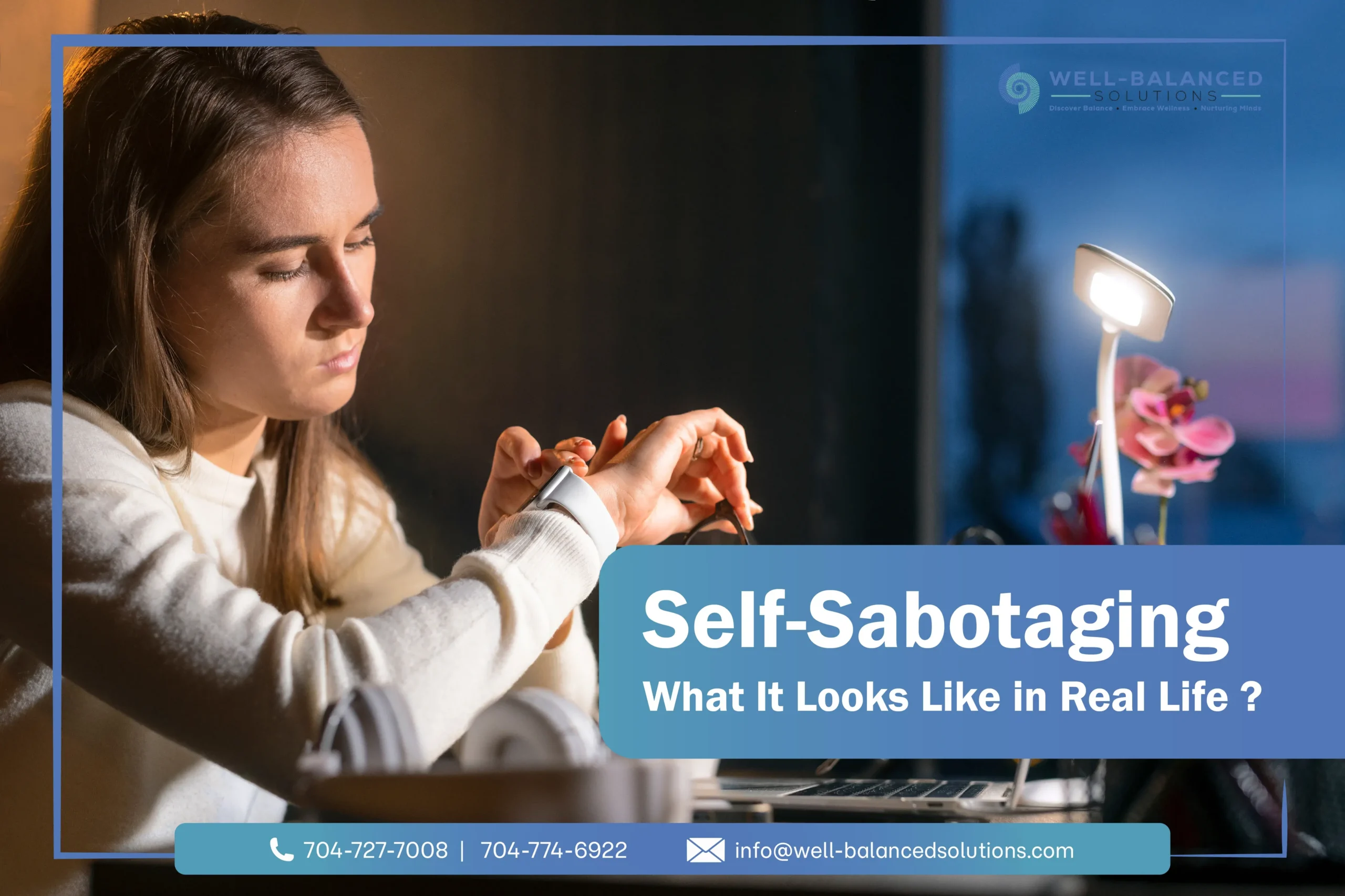
Many people work hard. Still, things fall apart before they begin. This is not always bad luck. Self-sabotaging means you block your own progress, without realizing it. Sometimes you avoid good chances.
Other times, you damage something that actually matters to you. Emotional self-sabotage feels invisible. It hides behind excuses, fear, and old habits. Poor emotional regulation keeps you stuck in the same cycle. Breaking free starts with understanding what is really happening inside you.
What Is Self-Sabotaging, And Why Is It So Hard to See?
Most people never notice they are blocking themselves. Self-sabotaging behavior feels completely normal from the inside. It looks like avoidance, overthinking, or giving up too early. Recognizing it changes everything.
Limiting beliefs run deep. You tell yourself you are simply not ready. So you wait. Nothing moves forward. Over time, waiting becomes your default setting.
The Hidden Patterns Behind Self-Sabotage
Many patterns stay hidden for years. They feel like personality, not problems. Slowly, they shape every decision you make.
- Cognitive distortions twist how you see small setbacks
- Self-sabotage patterns repeat silently across different situations
- Behavioral conditioning locks old reactions firmly in place
- Limiting beliefs sound exactly like your own inner voice
- Behavioral avoidance keeps you safe, but completely stuck
Why Do People Self-Sabotage? The Real Reasons
People rarely sabotage themselves on purpose. It usually starts with old pain that never healed. Fear grows quietly in the background. Trauma responses shape daily choices without any warning. Low self-worth makes success feel deeply uncomfortable inside.
Survival mechanisms once kept you safe. Now they hold you back. That is the real problem most people never see.
When Protection Becomes the Problem
Your nervous system learned certain patterns very early in life. Those patterns repeat automatically, even when danger is gone. Fear of failure stops progress before it starts. Fear of success does the same thing differently.
- Trauma responses keep you trapped in old protective cycles
- Fear of failure stops you before you even begin
- Low self-worth makes good opportunities feel genuinely unsafe
- Attachment patterns shape how you handle love and growth
- Survival mechanisms quietly turn protection into limitation
What Self-Sabotaging Looks Like in Real Life
Self-sabotage does not always look obvious or dramatic. Sometimes it hides inside small daily choices you barely notice. You procrastinate on tasks that genuinely matter to you. Procrastination habits quietly steal your time and energy every day.
However, the pattern goes much deeper than simple laziness. Overthinking patterns keep your mind constantly busy with doubt. Unhealthy coping mechanisms feel like comfort at first. Moreover, emotional dysregulation turns small problems into something far bigger.
In Your Daily Habits
Perfectionism stops more goals than actual failure ever does. You keep waiting for conditions to feel just right. Avoidant behavior feels like resting on the surface. Still, underneath it sits fear that has never been properly addressed or resolved.
In Your Relationships
Emotional suppression is one of the quietest self-sabotage signs. You stop sharing how you genuinely feel with others. Furthermore, people-pleasing slowly drains your energy. Relationship self-sabotage grows from small silences into complete emotional disconnection between people.
How to Stop Self-Sabotaging: Steps That Actually Work
Stopping self-sabotage starts with honest self-awareness. You cannot fix what you cannot see. Negative thought patterns keep pulling you back without warning. However, recognizing them gives you real power to respond differently.
Self-regulation skills build slowly over time. Furthermore, emotional resilience grows stronger each time you choose differently. Consistent steps create lasting change.
Rewiring the Inner Critic
Your inner critic sounds convincing. It uses your own voice against you. Shame cycles keep that critical voice running on repeat. Nevertheless, cognitive restructuring teaches your brain to respond with clarity instead of fear.
- Negative thought patterns lose power when you name them clearly
- Shame cycles break when you respond with self-compassion instead
- Cognitive restructuring rewires how your brain reads difficult situations
- Self-regulation skills help you pause before reacting automatically
- Emotional resilience builds every time you choose growth over avoidance
Struggling to break the cycle on your own? You do not have to navigate this alone. Our licensed therapists at WBS Mental Wellness help you understand your patterns and build real change.
How to Overcome Self-Sabotage in Relationships
Relationships reveal your deepest patterns. What feels like tension is often emotional avoidance in disguise. You withdraw instead of communicating. You react instead of responding. Psychological resistance makes honest conversations feel genuinely distressing inside.
However, emotional healing is absolutely possible. Trauma recovery takes time, but it works. Furthermore, emotional awareness helps you catch triggers before they cause damage. Emotional processing builds the bridge between your past pain and your present choices.
How to Help Someone Who Self-Sabotages
Helping someone else requires patience first. You cannot force change on another person. However, your support genuinely matters more than you realize. Fear conditioning runs deep inside people who self-sabotage regularly.
Moreover, nervous system dysregulation means their reactions feel completely out of their control. Psychological triggers fire without warning. Nevertheless, consistent emotional support slowly reduces unhealthy coping mechanisms over time. Furthermore, understanding their stress response helps you respond with compassion rather than irritation.
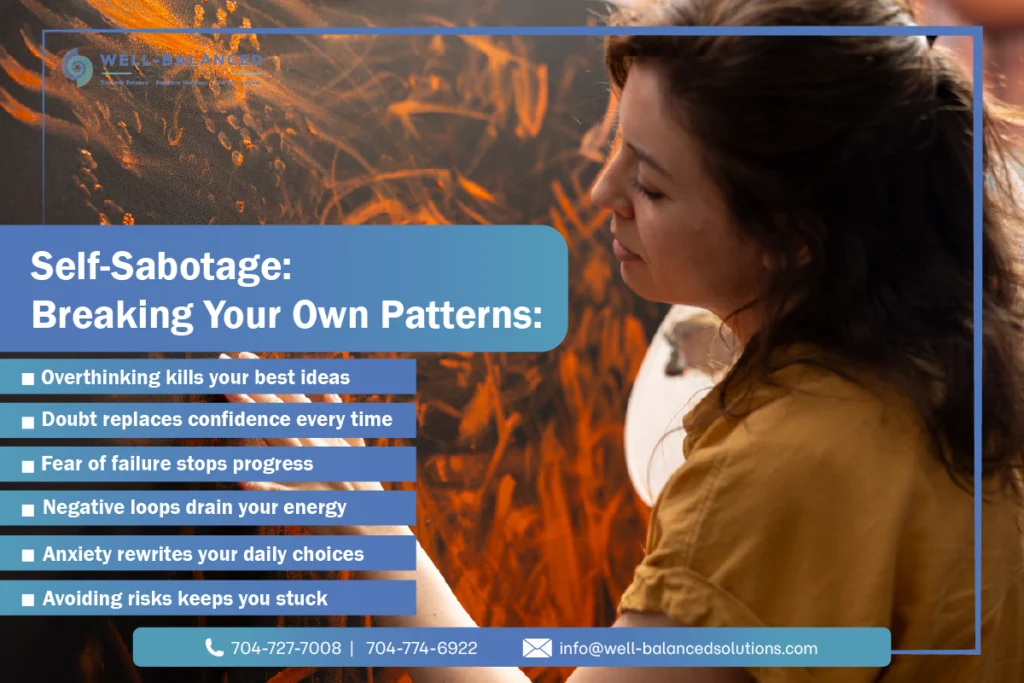
Why Choose WBS Mental Wellness
Self-doubt keeps many people from seeking help. However, asking for support is actually the strongest step you can take. WBS Mental Wellness understands how deeply self-sabotaging patterns affect real daily life.
Furthermore, anxiety and self-sabotage rarely disappear without proper guidance. Our licensed therapists use evidence-based approaches that address maladaptive coping at its root. Moreover, every session feels safe, structured, and completely supportive, free from start to finish.
Your Recovery Starts With One Honest Conversation
Real change begins the moment you decide to stop waiting. You have already taken the first step by reading this. WBS Mental Wellness is ready to walk the rest of the journey with you.
Thousands of people feel exactly where you are right now. They took one small step. That step changed everything. Your breakthrough begins with a single conversation.
Ready to stop self-sabotaging for good? Speak with a licensed therapist at WBS Mental Wellness today, completely free, no commitment required.
Conclusion
Self-sabotage is not a character flaw. It is a learned pattern, and learned patterns absolutely can change. You have already done the hardest part by recognizing what is happening inside you. However, awareness alone is seldom enough.
Real progress needs real support. Furthermore, healing looks different for every person. Still, one honest conversation can shift everything you thought was fixed in place, and you do not have to figure this out alone. Support is closer than you think.
Frequently Asked Questions
Perfectionism delays action indefinitely. However, waiting for perfect conditions quietly kills real progress over time.
Therapy addresses root causes directly. Furthermore, professional guidance reshapes deeply ingrained thought patterns far faster than willpower alone.
Research shows it appears across all genders. Nevertheless, emotional suppression makes it harder to recognize in certain individuals.
Writing builds self-awareness gradually. Moreover, tracking emotional triggers helps identify repeated patterns before they cause further damage.
Unaddressed patterns deepen over time. Professional support at any age produces genuinely meaningful and lasting results.