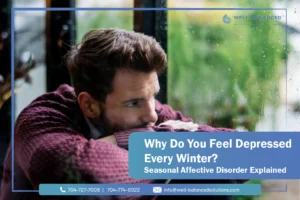
Every winter, does your mood quietly disappear along with the sunlight? You’re not imagining it, and this feeling has a real name. Seasonal Affective Disorder is a diagnosable form of depression tied to changing seasons. It usually starts in fall, deepens through winter, and lifts by spring.
Many people brush it off as ordinary winter blues and try to push through on their own. But when low energy, constant sadness, or oversleeping start eating into daily life, something deeper is going on. Doctors understand this condition well, and it responds to the right treatment.
What Is Seasonal Affective Disorder? (Symptoms)
Doctors describe seasonal affective disorder symptoms as depression signs that return with specific seasons. Energy drops, motivation fades, and daily tasks start feeling unusually heavy. Left unmanaged, these symptoms slowly disrupt sleep, appetite, work, and relationships.
Winter-Pattern Symptoms
Cold, darker months trigger the most familiar version of this condition. This pattern usually builds gradually, then intensifies as daylight continues to shrink. Most people notice the shift by late October or early November.
- Sleeping far more than usual
- Strong cravings for carbs and sugar
- Steady weight gain over several weeks
- Low energy despite adequate rest
- Withdrawing from friends and daily activities
Summer-Pattern Symptoms
Fewer people experience this warm-weather pattern, yet its impact feels just as heavy. Symptoms often build during long, hot days and ease once temperatures cool down. Onset typically begins in late spring and fades by early fall.
- Difficulty falling or staying asleep
- Reduced appetite and sudden weight loss
- Growing anxiety or nervous energy
- Increased irritability throughout the day
- Feeling agitated without an obvious cause
Persistent sadness, guilt, or thoughts of hopelessness always deserve prompt medical attention.
What Causes Seasonal Affective Disorder?
Reduced sunlight disrupts the body’s internal clock, known as the circadian rhythm. Doctors link most seasonal affective disorder causes to this daily rhythm getting thrown off balance. Serotonin, a brain chemical that regulates mood, often drops when sunlight exposure decreases.
Melatonin levels shift too, affecting sleep quality and overall energy throughout the day. Low vitamin D, common in darker months, can further weaken serotonin activity. Interestingly, people with bipolar disorder sometimes notice mood swings that follow this same seasonal pattern.
Who's Most at Risk? (Seasonal Depression in Adults)
Roughly 5% of adults experience this condition each year. Women experience it up to four times more often than men do. Most cases begin between ages 18 and 30, though onset varies. People living farther from the equator face higher risk due to shorter winter days.
Family history also raises the odds, especially alongside anxiety, ADHD, or bipolar II disorder. Seasonal depression in adults tends to feel heavier across northern regions, including cities like Richmond, Charlotte, and Raleigh.
Winter Blues vs. Seasonal Affective Disorder: What's the Real Difference?
Everyone feels a little low during gray, cold days sometimes. Winter blues come and go, without stopping you from enjoying life. You might skip one outing, then feel fine again the next day. Seasonal affective disorder runs deeper, touching nearly every part of daily functioning.
Favorite hobbies stop feeling enjoyable, and simple routines start feeling exhausting. Doctors typically look for this pattern repeating for two consecutive years before diagnosing it.
Still Guessing What's Wrong?
Real answers beat guesswork, especially when your mood is involved. Get a same-week virtual evaluation with a licensed WBS provider.
How Is Seasonal Affective Disorder Diagnosed?
A proper seasonal affective disorder diagnosis starts with a thorough clinical conversation. Providers first rule out other causes, like thyroid problems or vitamin deficiencies. They also confirm that the pattern has repeated for at least two consecutive years.
This step matters because several conditions mimic depression’s fatigue and low mood symptoms. Once other causes are ruled out, providers can recommend the most effective treatment plan. A diagnostic evaluation is usually the clearest first step toward answers.
Treatment Options for Seasonal Affective Disorder
Effective treatment for seasonal affective disorder usually combines several approaches for lasting results. Providers often recommend light therapy, talk therapy, medication, or a mix of these.
Light Therapy, Psychotherapy & Medication
Each option targets the condition from a slightly different angle. Light boxes mimic natural sunlight, helping reset the body’s internal clock each morning. Cognitive behavioral therapy reshapes negative thought patterns tied to seasonal changes.
Antidepressants, particularly SSRIs, help restore healthy serotonin balance over several weeks.
- Sessions usually last 20 to 30 minutes
- CBT-SAD often runs as a 6-week program
- Medication may start weeks before symptoms peak
- Combining approaches often brings stronger, faster relief
- Regular follow-ups track progress and adjust care
Personalized Care Through Telepsychiatry
Virtual care makes it easier to maintain consistent treatment during busy winters. WBS Mental Wellness offers medication management and telepsychiatry through secure video visits. Genetic testing can also guide more precise medication choices for certain patients.
- Appointments available without long waiting periods
- Prescriptions sent directly to your pharmacy
- Follow-ups scheduled around your daily routine
- Secure, HIPAA-compliant video platform used throughout
Self-Care Strategies to Get Ahead of Seasonal Symptoms
mall daily habits can ease symptoms before they take full hold. A short walk outside each morning brings natural light exposure that helps regulate mood and energy. Keeping a consistent sleep-wake schedule protects your body’s internal clock from further disruption.
Staying socially connected matters too, especially when withdrawing feels tempting during colder months. Planning enjoyable activities ahead of time makes it easier to follow through, even on low-motivation days.
None of these habits replace professional care, but they do support it well. If sadness lingers for weeks, or hopelessness and thoughts of self-harm ever appear, reach out right away. Call or text 988 for the Suicide and Crisis Lifeline anytime.
Why Choose WBS Mental Wellness
WBS Mental Wellness provides compassionate, evidence-based psychiatric care through secure virtual visits. Licensed providers, including Tanita Sweat, MSN, APRN, FNP-C, PMHNP-BC, deliver personalized evaluations and ongoing medication management.
Patients across Virginia and North Carolina, including Charlotte, can choose flexible scheduling without long wait times. Most major insurance plans are accepted, making quality mental health support genuinely accessible.
- Board-certified psychiatric nurse practitioner-led care
- Virtual visits from home, no commute required
- Insurance accepted, minimal out-of-pocket surprises
- Ongoing support beyond a single appointment
Your Mood Doesn't Have to Wait for Spring
Compassionate, licensed psychiatric care is one click away. Most major insurance accepted, visits often start this week.
Conclusion
Seasonal Affective Disorder is real, common, and genuinely treatable with proper support. Feeling low every winter doesn’t mean you have to push through it alone.
Understanding your symptoms is the first step toward lasting relief. Small, consistent steps often lead to noticeable improvement over time. Support is closer than most people realize, and help truly works.
Frequently Asked Questions
Symptoms typically last 4 to 5 months, often starting in fall and improving once spring brings longer daylight hours back.
Symptoms sometimes ease naturally once spring arrives, but professional treatment provides faster relief and helps prevent worsening symptoms in subsequent years.
Some people notice mild headaches, eyestrain, or slight nausea when starting light therapy, though these effects usually fade quickly.
Yes, though it's less common in children, symptoms can appear during adolescence and should be evaluated by a mental health provider.
Most major insurance plans cover psychiatric evaluations and medication management, though coverage varies, so verifying benefits beforehand is recommended.