
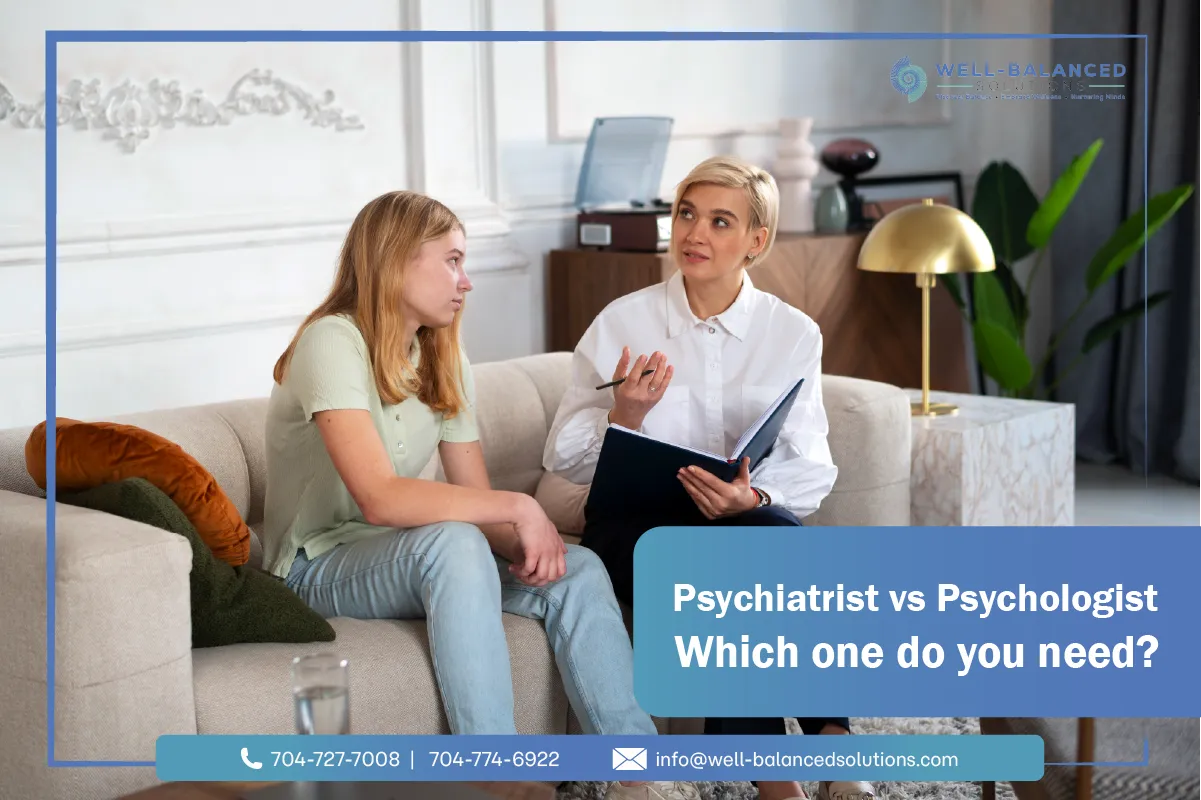
If you are trying to get help for anxiety, low mood, focus problems or sleep, the first question is often “who do I even call?” The names sound alike, the offices look alike, and the answer changes depending on what you need. Here is a plain way to tell them apart.
The short answer
A psychiatrist is a medical doctor who diagnoses mental health conditions and can prescribe medication. A psychologist has a doctoral degree in psychology and focuses on psychotherapy and psychological testing. In most states, psychologists do not prescribe.
There is a third group that people often miss: psychiatric nurse practitioners. They are advanced practice nurses who diagnose, prescribe and follow medication over time, and in many practices they are the ones people see for medication care.
If your main question is “could medication help me?”, you want someone who can prescribe. If your main question is “how do I change the way I handle this?”, you want someone who does therapy. Many people end up with both.
What each one does
| Psychiatrist | Psychiatric nurse practitioner | Psychologist | |
|---|---|---|---|
| Training | Medical degree (MD or DO), then psychiatry residency | Nursing degree, graduate degree, board certification in psychiatric-mental health | Doctoral degree (PhD or PsyD), supervised clinical training |
| Diagnoses conditions | Yes | Yes | Yes |
| Prescribes medication | Yes | Yes | Usually no |
| Talk therapy | Sometimes, often brief | Often brief and supportive | Yes, this is the core of the work |
| Psychological testing | Rarely | Rarely | Yes (for example for ADHD, learning or personality questions) |
| Typical visit | Short, regular check-ins about symptoms and medication | Same | Longer weekly or biweekly sessions |
The word therapist is broader. It covers psychologists, licensed professional counselors, clinical social workers and marriage and family therapists. We cover that difference in our guide to the difference between a therapist and a psychologist.
When to see a prescriber
A psychiatrist or psychiatric nurse practitioner is usually the right first call when:
- You are wondering whether medication would help, or you are already on medication and it is not working the way you hoped.
- You have symptoms that interfere with work, sleep or relationships most days, such as constant worry, panic, a low mood that will not lift, or racing thoughts.
- You think you may have ADHD, bipolar disorder, or another condition where a medical evaluation matters.
- You have been prescribed medication by a primary care doctor and want a specialist to review it.
- You want an online psychiatric evaluation to find out what is going on before deciding anything.
At a first visit, the prescriber asks about your symptoms, history, sleep, substance use, medical conditions and family history. The goal is a diagnosis and a plan. If medication fits, they explain the options, the common side effects and how long it takes to judge whether it is helping. Follow-up visits are short and focused on how you are doing. You can read more about this in our page on medication management.
When to see a psychologist
A psychologist is usually the better fit when:
- You want to work on patterns, such as how you react to stress, relationships or past events.
- You want a structured approach like cognitive behavioral therapy.
- You need formal testing to clarify a diagnosis, for example for ADHD or a learning difference.
- Medication is not what you are looking for right now.
Therapy takes time, and the work happens between sessions as much as in them. For many conditions, research supports therapy as a first-line treatment on its own.
Do you need both?
Often, yes, and that is normal. Someone with moderate depression might see a therapist weekly to build skills while a prescriber reviews medication every month or two. The two professionals can share notes, with your permission, so that nobody is working blind.
A useful rule of thumb is to start with the question you most need answered. If it is about medication or a possible diagnosis, start with a prescriber. If it is about coping, habits or relationships, start with therapy. You can add the other later.
Does it matter if the visit is online?
For most medication follow-ups, no. Video visits work well for talking through symptoms, reviewing side effects and adjusting a plan. Some situations, such as certain controlled-medication rules or physical tests, can require an in-person step. Your provider will tell you if that applies.
How Well-Balanced Solutions fits in
Tanita Sweat is a psychiatric nurse practitioner (MSN, FNP-C, PMHNP-BC) who provides psychiatric evaluation and medication management for patients in Virginia and North Carolina, by video and in person. Her visits combine medication care with practical, supportive guidance on sleep, stress and daily habits. If you are not sure whether you need a prescriber or a therapist, the first appointment is a good place to find out. She can tell you honestly if therapy should be the next step and help you with a referral.
Book an appointment to talk through what you are dealing with.
Frequently asked questions
Can a psychologist prescribe medication?
In most states, no. A small number of states allow specially trained psychologists to prescribe. Check your state’s rules.
Is a psychiatrist better than a psychiatric nurse practitioner?
Neither is “better.” Both diagnose and prescribe. The right choice depends on your needs, how complex your history is, and who you can see soon. Many people value a provider they can follow with consistently.
Do I need a referral?
Usually not for private-pay or many insurance plans, but rules vary. Ask your insurer and the practice when you book.
Which is cheaper?
Prices vary widely by provider and plan, so ask before your first visit. Medication check-ins are often shorter than therapy sessions.
What if I am in crisis?
If you are thinking about harming yourself or someone else, call or text 988 (the Suicide and Crisis Lifeline) or call 911. Do not wait for an appointment.
This article is for general information and is not medical advice. It does not replace an evaluation by a licensed provider.